Imperial Beach water damage restoration, start to finish
If you own or rent in Imperial Beach and the floor or a wall is soaked, WaterFirst passes your description to a nearby restoration company. The job runs in a fixed order: extraction first, then drying the structure, and rebuilding last. It is the same process as water damage restoration in Chula Vista, in a town with its own water company, its own sewer crew and more weather off the ocean.
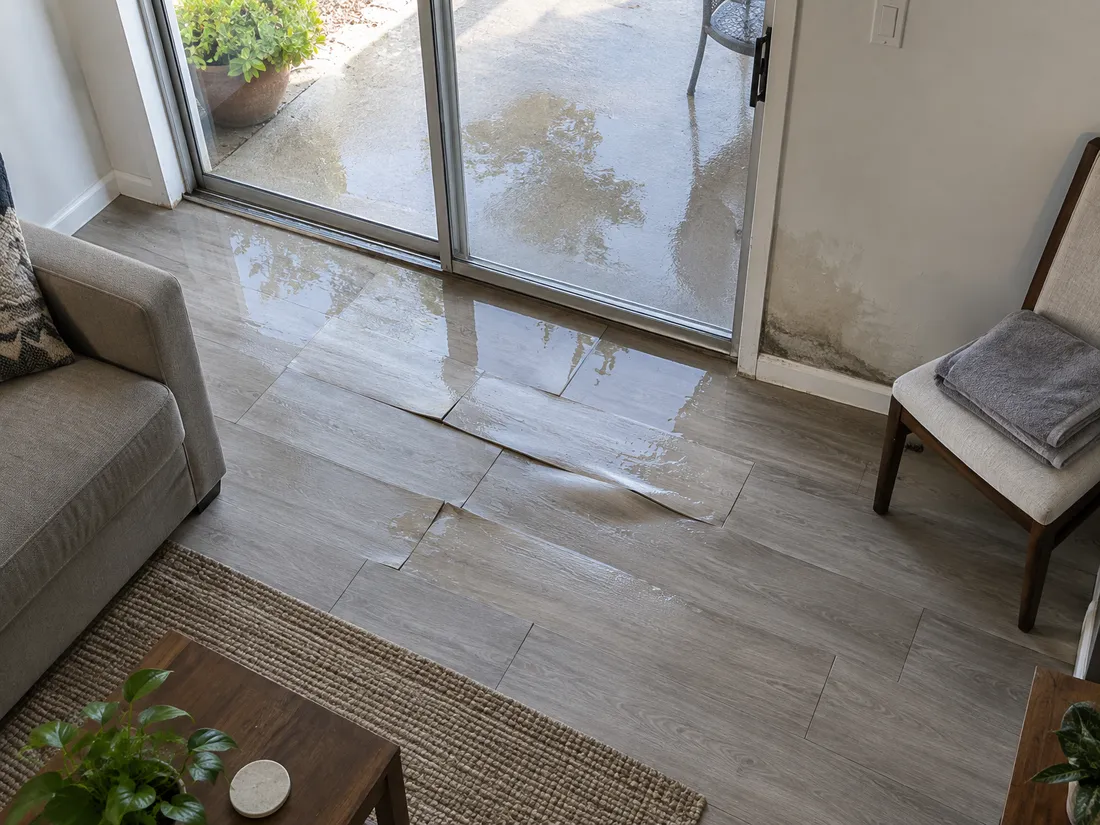
Laminate floors show a leak quickly. The planks swell at the seams and peak, and once the core has taken on water they rarely lie flat again, so a restoration company will usually lift them to dry the floor underneath. Leave a wet wall closed up for a couple of days and mould follows; the mold remediation page explains what removing it involves.
Your water company is California American Water
Sweetwater Authority supplies National City, Bonita and western and central Chula Vista, and Otay Water District supplies the east of the city. Imperial Beach is on neither: the City’s own page says California American Water serves the City. So if a hidden leak has run up your bill, Cal Am’s rules are the ones that apply, not the Sweetwater rules you may read about for National City or Bonita.
Cal Am says it may adjust a high bill caused by excessive water use. A leak at the property counts, and it names both leaks inside the house, in the plumbing or an appliance, and leaks outside it on the service line. Two conditions matter: resolve the problem before you apply, and submit within six months of the leak. While the request is processed, Cal Am suggests paying what a normal bill would have been, and it says the open balance will not go to collection in the meantime.
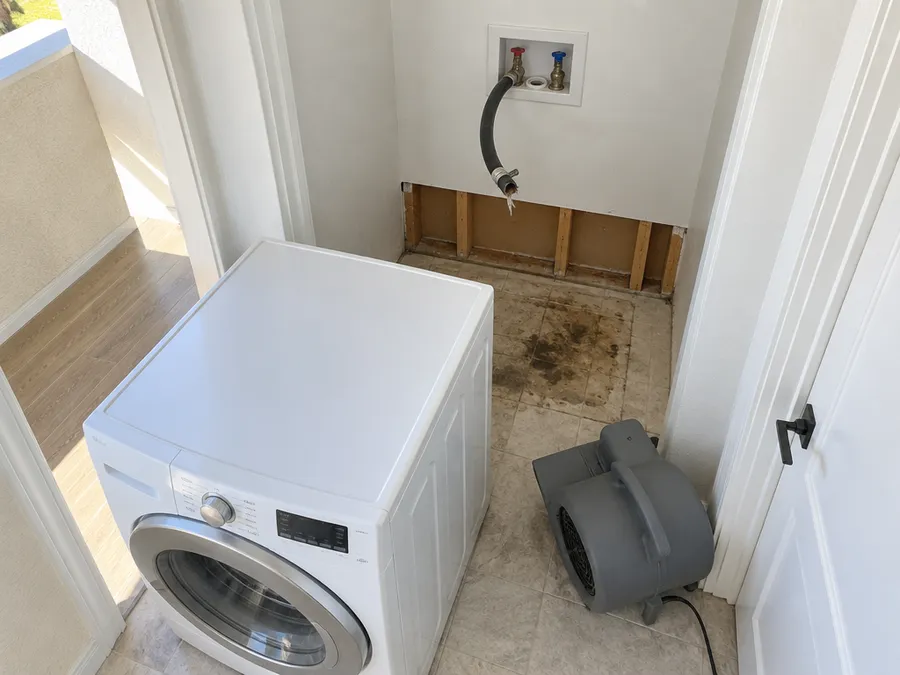
If a washer hose split while you were out, both the bill and the laundry closet will show it. For the house, what matters is how far the water ran under the machine and into the wall behind it.
King tides, storms and water from outside
The City describes Imperial Beach as a low-lying coastal community, bounded by water on three sides, and vulnerable to coastal flooding. Its Community Resilience Plan names the causes it is working on: storms, king tide events and projected sea level rise, from the Pacific Ocean or the estuary.
Water that comes in from outside needs different handling from a burst hose. Rising floodwater counts as Category 3 in the restoration trade, alongside sewage. Carpet, pad and the lower drywall it reached are treated as contaminated and replaced; the sewage cleanup page covers that category in detail. It is also a different insurance question: a standard homeowners policy covers water that escapes from the plumbing, not flood.
The City’s sewer crew
The City of Imperial Beach runs its own sewer system. Its Sewer Division operates and maintains eleven pump stations and fifty miles of sewer collection pipe, and the City pays the City of San Diego’s metropolitan sewer system to treat the wastewater. For a problem with a public sewer, the City’s sewer maintenance page lists the supervisor’s contact.
The City’s code chapter on the private lateral, the pipe from your house to the main, was not readable when this page was written, so no rule is given here. Check with the Sewer Division about who owns which length of pipe first.
Renting, and the rebuild
Only 31.0% of Imperial Beach homes were owner-occupied in the Census Bureau’s 2018 to 2022 estimate, so renters are the majority. If you rent, report water damage to the owner or manager in writing, with photos, the day you find it.
When the rebuild starts, the City’s Building Division handles the permits, all of them online now. The restoration cost guide lists published price ranges, and the South Bay page compares the other towns.